


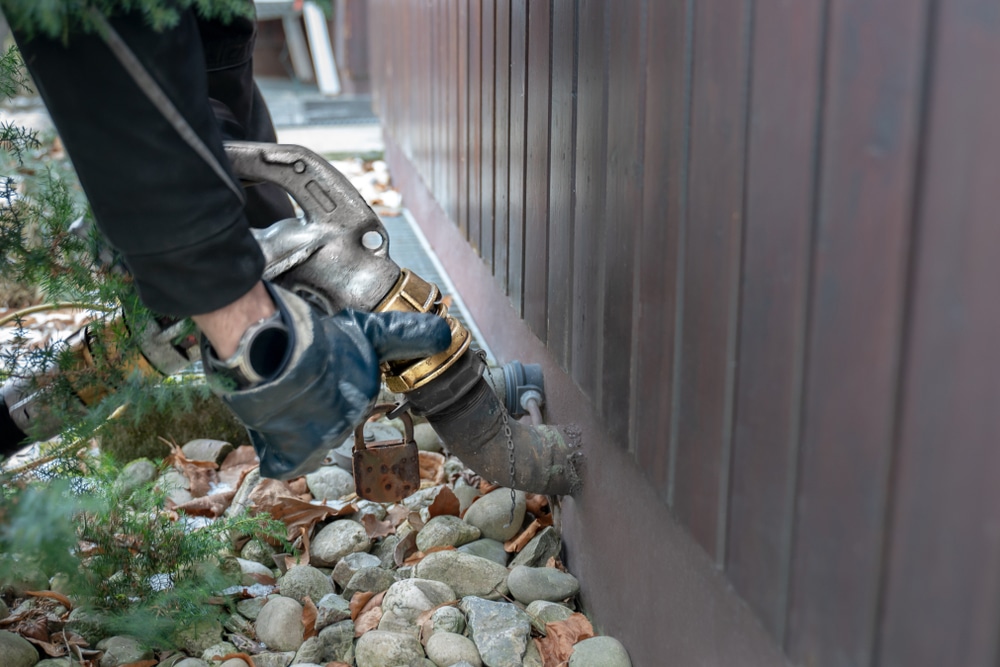
Time to put in a new heating oil tank to replace the old one? Or are you wondering if it should be above ground or buried? Then there is the concern of what to do should the present tank begin to leak.
Homeowners on Long Island put these questions to us regularly. They are more important than one might think. We at United Water Restoration Group of Long Island have been doing oil spill remediation in Nassau and Suffolk County since 2019. In the event of a spill or leak, we can be reached at (631) 832-4649 around the clock.
But first let us consider the decision itself. The kind of tank you have will dictate your risk, the maintenance it requires and your cleanup costs in the future.
Why Tank Location is Important
A heating oil tank holds a fuel that is as messy as it is essential. Should it give way, the oil has to go somewhere. Whether the tank is below or above ground makes all the difference in how a leak is found, put under control and put right.
Let’s look at the two options without any spin.
The Case for Above-Ground Oil Tanks
They are the usual choice for good reason. An above-ground unit will be in a basement or utility room or outside by the house in plain view.
Some of the benefits are:
- Leaks and rust are easy to spot on a visual inspection
- There is no need for excavation so installation and replacement run less
- Technicians have unimpeded access for any repairs
- Fuel levels are simple to monitor
- A spill tends to be confined to a small area, say within a room
There are cons to an above-ground tank as well. They occupy space in the home or yard and are not much to look at. An outdoor model is subject to the elements here on Long Island and that hastens corrosion. Cold weather can impede fuel flow in an exterior tank. But being able to see a problem with the tank is enough for most homeowners to prefer this option.
Underground Oil Tanks: The Pros
Some of the older homes on Long Island still have a tank in the yard from when they were in vogue. There are some genuine advantages to them.
- They are out of sight and leave the yard uncluttered
- Weather and temperature do not affect them
- You do not have to worry about fire or having a tank inside the house
- It is easier to fit a larger capacity underground
Underground Oil Tanks: The Cons
The fact that they are hidden is also their undoing.
The problems are of a serious nature:
- Corrosion or a leak will not be seen until the oil is in the soil or on the surface
- Before anyone is aware of it, a leak can get into the groundwater
- Remediation is a lot more work and expense
- Any repair or removal means you have to dig
- If a spill goes onto a neighbor’s land or water supply the environmental liability is considerable
When an underground leak finally shows itself the damage is usually extensive. Our oil spill remediation team is often called in for just such a scenario.
What to Do on Suspicion of a Leak
It does not matter if the tank is buried or not; certain signs call for immediate action. A heavy smell of oil, an unaccounted for drop in the fuel gauge, oily marks around the tank or dead grass over a buried line are all reasons to make a phone call.
Do not try to clean up oil contamination on your own. It calls for the proper equipment and an understanding of local rules. We are licensed and insured. Our location puts our government licenses on display, HI-62149 for Suffolk and 151383 for Nassau. As an IICRC Certified Firm our technicians are certified as well.
You will speak to a live person when you call us. We do not send emergencies to an answering service or voicemail.
Expert Help on Long Island
For a professional opinion, a suspected leak or an actual oil spill, United Water Restoration Group of Long Island is available 24/7. We work with any insurance company on the claims process and provide free inspections and same-day scheduling to homeowners and businesses in Nassau and Suffolk County. Give us a ring at (631) 832-4649 and let us put our team to work protecting your property.