
Licensed Asbestos Testing, Removal, and Abatement for Long Island’s Pre-1980 Homes
Long Island sits at a unique intersection of postwar American history and public health risk that most homeowners don’t fully appreciate until a renovation project, a restoration job, or a routine inspection brings it bubbling to the surface. Between the late 1940s and the late 1970s, Long Island experienced one of the most concentrated periods of residential construction in American history. Asbestos was widely used in floor tiles, pipe insulation, roofing materials, textured ceiling finishes, drywall joint compounds, and boiler wrap throughout this period because it was inexpensive, durable, and highly effective as both an insulator and a fire retardant. The health risks it posed when disturbed, and its fibers became airborne, were not yet understood or regulated.
For Nassau and Suffolk County homeowners, this means that any pre-1980 home is a candidate for asbestos-containing materials, and any project that disturbs those materials, whether a planned renovation, a post-flood restoration, or fire damage cleanup, requires asbestos testing before work proceeds. UWRG of Long Island provides licensed asbestos testing, asbestos removal, and full asbestos abatement services in Long Island, NY, with certified inspectors, proper containment protocols, and New York State Department of Labor-compliant disposal procedures on every project.
Signs You May Need Asbestos Testing on Your Long Island Property
Not every Long Island homeowner knows when asbestos testing is appropriate, and the absence of visible warning signs is not a reliable indicator that asbestos-containing materials are absent.
Here are the situations that warrant professional asbestos testing:
- Your home was built before 1980.
- You’re planning a renovation or demolition project.
- Your property has sustained water, fire, or storm damage.
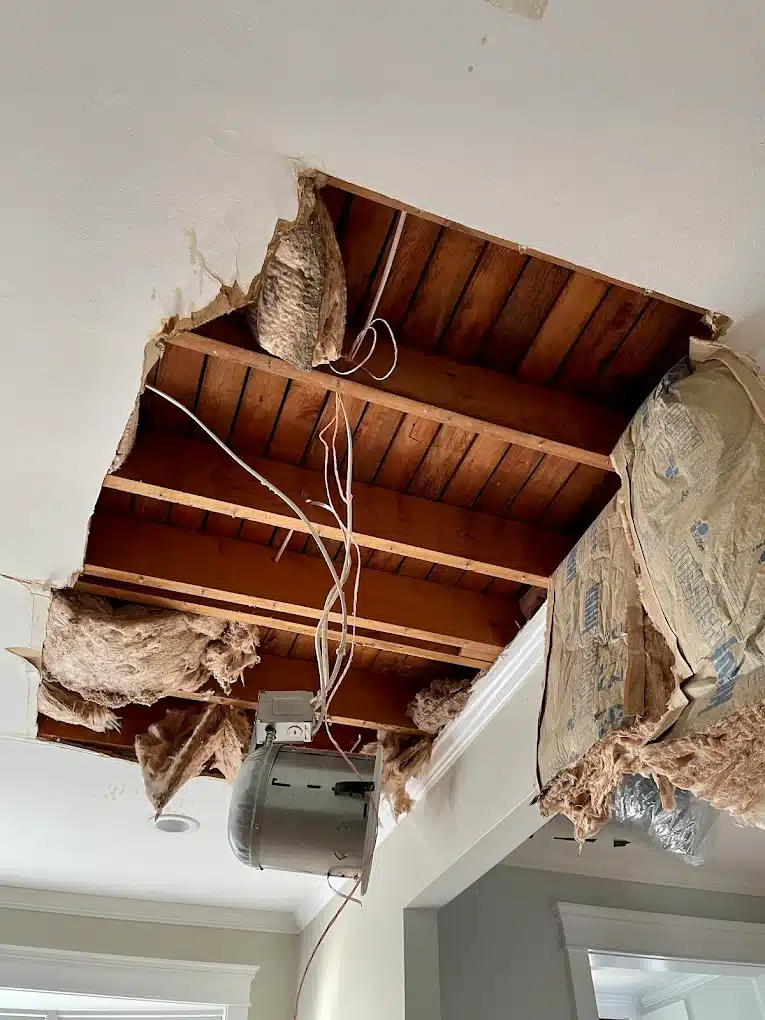
- You notice deteriorating insulation, damaged floor tiles, or crumbling ceiling material.
- You’re purchasing or selling a home.
The Difference Between Asbestos Testing, Removal, and Full Abatement
These three terms are frequently used interchangeably, but they describe distinct services with different scopes and regulatory requirements. Understanding the difference helps Long Island property owners know exactly what they need before they call.
Asbestos Testing
Asbestos testing is the process of identifying whether asbestos-containing materials are present in a property, where they are located, and what condition they’re in.
Our asbestos testing process includes:
- Collection of bulk samples from all suspect materials throughout the property by a licensed asbestos inspector
- Submission of samples to an accredited laboratory for fiber analysis
- Identification of which materials contain asbestos and at what concentration
- Determination of whether each material is friable (can be crumbled and release fibers) or non-friable (bound in a matrix that limits fiber release under normal conditions)
- Formal written report with findings and recommendations provided upon completion
- All inspections conducted by a licensed asbestos inspector certified by the New York State Department of Labor, as required for regulated projects in New York State
Asbestos Removal
Asbestos removal refers specifically to the physical extraction of identified asbestos-containing materials from a property, performed after testing has confirmed their presence and a determination has been made that removal is required.
Our asbestos removal process includes:
- Pre-removal containment setup to protect adjacent areas from fiber release during extraction
- Physical removal of identified asbestos-containing materials by licensed workers in full protective equipment
- Strict adherence to New York State Department of Labor and EPA containment and worker protection protocols
- Classification and handling of all removed materials as regulated asbestos-containing waste
- Transport and disposal at permitted asbestos waste disposal facilities in compliance with New York State regulations
- Post-removal documentation provided for permitting, insurance, and regulatory recordkeeping purposes
Asbestos Abatement
Asbestos abatement is the most comprehensive of the three services, encompassing the complete process of identifying, containing, removing, and disposing of asbestos-containing materials in full compliance with all applicable regulatory requirements.
Our full asbestos abatement process includes:
- Containment barrier setup and negative air pressure environment to prevent fiber release into unaffected areas of the property
- Physical removal of all identified asbestos-containing materials by licensed workers in appropriate protective equipment
- Continuous air monitoring throughout the abatement process
- Proper packaging, transport, and disposal of all asbestos-containing waste at permitted facilities
- Final clearance air testing upon project completion to confirm fiber levels have returned to acceptable levels
- Complete project documentation including air monitoring results, clearance testing, and disposal records provided upon completion
- Full compliance with New York State Department of Labor and EPA requirements managed by UWRG of Long Island as a licensed asbestos abatement contractor serving Nassau and Suffolk County
Asbestos Testing, Removal, and Abatement Considerations for Long Island Homeowners
Asbestos was used in construction and industrial insulation, in pipes, attics, ceilings, and as a fireproofing material.
It’s a dangerous material to work with, and the service you need for it depends on the exact situation you’re dealing with.
Asbestos Testing Considerations
Asbestos is hard for homeowners to identify on their own. That’s where testing comes in: safely assessing whether what you suspect is dangerous may be asbestos.
We frequently get calls for this for:
- 9×9 floor tiles in Levittown Cape Cod Kitchens: These linoleum tiles beneath your floor become a breeding ground for mold.
- Oil-to-gas boiler conversions in Nassau County: Starting a project to switch out old boilers often leads to discovering asbestos around pipe insulation. Testing here is often a NY state requirement.
- Popcorn ceilings and joint compound in 1960s split-levels: These bumpy ceilings were popular from the 1940s-early 90s, and they do sometimes contain asbestos.
- Historic North Shore and Gold Coast estates: For older properties you’re planning to demolish, testing any suspect materials is a standard practice.
Asbestos Removal Considerations
After testing, removing asbestos and asbestos-containing materials is the next logical step.
It’s a step we commonly take on during:
- Corrugated pipe insulation in Suffolk County basements: Deteriorating pipes tend to leave basements damp and dangerous. Those brittle pipes can send fibers airborne.
- Mastic and black adhesive during South Shore flood cleanups: Adhesives and construction sealants like mastic are the foundational glues found beneath floors. That glue can contain asbestos.
- Transite siding on coastal cottages in the Hamptons: Unfortunately, transite siding contains asbestos, and as the years go by, they age and crumbles pretty easily. Disposing of them should always be left to a pro.
- Asbestos cement flues during chimney and roof work: The flues that vent out chimney smoke were often built from cement and asbestos. Even disturbing them during work can be dangerous and leave you exposed.
Asbestos Abatement Considerations
After testing and removal comes abatement. The process covers the full spectrum of asbestos response, a regulated technique that covers containment, removal, and clearing of asbestos from the project area.
We typically use abatement during scenarios like:
- Vermiculite attic insulation in wooded Huntington neighborhoods: This pebbly insulation was used from the late 1910s all the way up to the 1990s. We carefully remove it from homes to prevent the spread of invisible fibers.
- Fire-damaged balloon-framed houses: Balloon-framed homes have been a historically popular home style, one that’s unfortunately become a severe fire risk. Fire disturbing the asbestos-filled materials and components that make up these homes is a major risk.
- Full gut renovations in Massapequa and Hicksville: Post-war properties in the midst of a remodel need full-scale abatement.
Schedule Your Asbestos Testing or Abatement Services Today
UWRG of Long Island provides licensed asbestos removal and full asbestos abatement services in Long Island, NY, with certified inspectors, proper regulatory compliance, and the same clear communication and professional standard we bring to every service we offer. Call us today for a free visual assessment and let our team help you understand what your property contains and what your options are.